Discover Chateauneuf-du-Pape in 10 facts
- Chateauneuf-du-Pape is the Southern Rhone’s most prestigious appellation, renowned for its age-worthy red and white wines.
- Leading producers such as Chateau Rayas, Domaine du Pegau, and Clos des Papes are highly sought after on the secondary market.
- The region offers strong value compared to Bordeaux and Burgundy, making it an increasingly popular choice.
As the most prestigious appellation in the Southern Rhone, Chateauneuf-du-Pape occupies a unique position in the fine wine market. Renowned for its rich history, distinctive terroir, and long-lived wines, the region has produced some of France’s most sought-after bottles. From its papal origins to its role in shaping modern wine law, these ten facts explain why Chateauneuf-du-Pape remains one of the wine world’s most fascinating regions.
1. The Rhone is France’s fourth major fine wine region
Alongside Bordeaux, Burgundy, and Champagne, the Rhone Valley is considered one of France’s four most important fine wine regions. While it enjoys a strong reputation among collectors and critics, it remains a relatively small segment of the secondary market.
This is reflected in Liv-ex data, where Rhone wines account for just 5% of brands featured in the Liv-ex Power 100. Consumer interest is similarly concentrated, with only a handful of Rhone wines ranking among Wine-Searcher’s most-searched labels. While this can present opportunities for collectors seeking value, market liquidity is generally strongest among the region’s most established producers.
2. Chateauneuf-du-Pape helped shape modern wine law
The name Châteauneuf-du-Pape translates as “the Pope’s new castle” and dates back to the 14th century, when the Papacy relocated from Rome to nearby Avignon. Several popes took a keen interest in the area’s vineyards, helping establish the region’s reputation for wine production.
Chateauneuf-du-Pape’s influence extends beyond its history. In 1936, it became one of the first French regions to receive Appellation d’Origine Controlee (AOC) status, following the efforts of Baron Pierre Le Roy of Chateau Fortia. The Baron recognised that rigorous self-regulation was the only way to protect the region’s reputation from adulteration, “identity theft” and industrial wine adjacent products using the Chateauneuf-du-Pape name. His work helped create the framework for protecting wine origin, authenticity, and production standards across France, forming the foundation of the AOC system still used today.
This landmark 1936 decree also established five other foundational AOCs: Arbois, Cassis, Cognac, Monbazillac, and Tavel. Regions like Pauillac were only recognised the following year in 1937.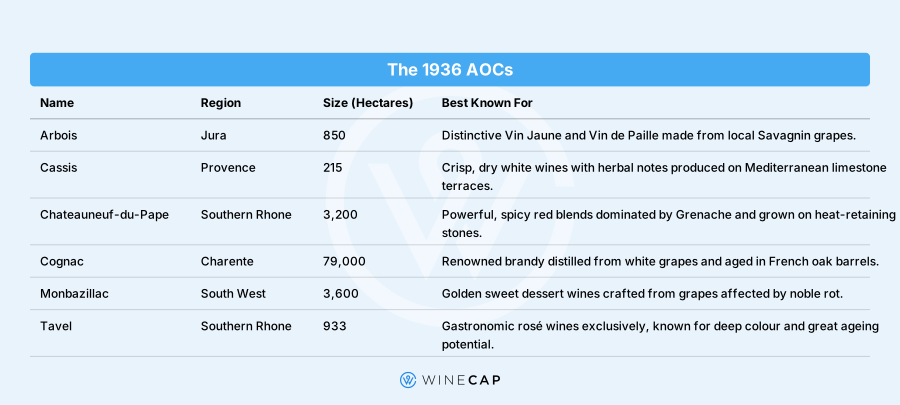
The region is also home to one of the most eccentric laws in the world of wine. In 1954, during a period of global UFO hysteria, the local mayor passed a municipal decree banning flying saucers from landing or taking off in the vineyards. Known as the Cointet law, it remains on the books today. Thankfully, it has not impacted the emerging use of drones in viticulture.
3. Chateauneuf-du-Pape is the flagship appellation of the Southern Rhone
The Rhone Valley is divided into two distinct wine regions: the Northern Rhone and the Southern Rhone. Chateauneuf-du-Pape is widely regarded as the leading appellation of the South, both in terms of reputation and international recognition.
The region is home to some of the Rhone Valley’s most sought-after wines, including Chateau Rayas, which consistently ranks among the most searched-for and collectible Rhône labels. Alongside estates such as Clos des Papes, Château de Beaucastel, and Domaine du Pegau, it has helped establish Chateauneuf-du-Pape as the benchmark for Southern Rhone fine wine.
While the Northern Rhone is known for Syrah-based wines from appellations such as Hermitage and Cote-Rotie, Chateauneuf-du-Pape is best known for its Grenache-led blends, which typically produce richer, fuller-bodied wines. The appellation also offers a broader range of price points than many Northern Rhone wines, contributing to its enduring appeal among collectors.
4. Chateauneuf-du-Pape is one of the Rhone’s driest appellations
Chateauneuf-du-Pape’s terroir is defined by heat, sunshine, and limited rainfall. The appellation is one of the driest in the Rhone Valley, with conditions that encourage vines to develop deep root systems in search of water. These naturally low-yielding conditions contribute to the concentration and intensity for which the region’s wines are known.
The region is equally famous for the Mistral, a powerful north wind that sweeps through the Rhone Valley. While strong gusts can occasionally damage vines, the Mistral plays a vital role in vineyard health by reducing humidity and drying vineyards after rainfall. This helps limit the spread of fungal diseases and has long supported the widespread adoption of organic and low-intervention viticulture.
5. The famous galets roules were shaped by the ancient Rhone
One of the defining features of Châteauneuf-du-Pape is its abundance of galets roules – large, rounded quartzite stones that cover many of the region’s most renowned vineyards, particularly the plateau of La Crau. These stones were carried downstream by the ancient Rhone River and deposited over thousands of years, creating one of the appellation’s most distinctive landscapes.
The galets roules play an important role in vine growing. During the day, they absorb heat from the Provençal sun before gradually releasing it overnight, helping grapes achieve consistent ripeness throughout the growing season. They also promote drainage and help reduce water evaporation from the soil, which can be particularly beneficial during the hot, dry summers for which the region is known.
Although galets roules are the appellation’s most recognisable geological feature, Chateauneuf-du-Pape’s terroir is remarkably diverse. The region’s vineyards are planted across a patchwork of soils that includes sand, limestone, clay, and gravel, contributing to the wide range of wine styles produced across the appellation.
6. Chateauneuf-du-Pape permits 18 grape varieties
Few fine wine regions allow as much blending flexibility as Chateauneuf-du-Pape. The appellation officially authorises 18 grape varieties, giving producers a wide range of options when crafting their wines. This diversity allows winemakers to adapt to different growing conditions and create blends that balance fruit, structure, freshness, and ageing potential.
The primary backbone of the region is the “GSM” blend, consisting of:
- Grenache: Providing plush red fruit, high alcohol, and soft tannins.
- Syrah: Adding structural tannins, deep colour, and notes of black pepper.
- Mourvedre: Providing the earthy complexity and structural bones required for long-term cellaring.
The technical requirements for these wines are among the strictest in France. Every bottle must reach a minimum natural alcohol of 12.5%, and the practice of adding sugar to increase alcohol is strictly forbidden. Furthermore, the 100% hand-harvesting rule ensures that only the highest quality fruit enters the winery.
7. White Chateauneuf-du-Pape represents just 5% of production
Although Chateauneuf-du-Pape is best known for its red wines, the appellation also produces a small quantity of white wine. White Châteauneuf-du-Pape accounts for only around 5% of total production, making it one of the region’s lesser-known specialties.
The wines are typically made from varieties including Grenache Blanc, Roussanne, Clairette, and Bourboulenc. Unlike many white wines from cooler regions, they are often full-bodied and richly textured, with flavours ranging from stone fruit and citrus to honeysuckle, fennel, and spice.
Some of the appellation’s most highly regarded whites, such as Chateau de Beaucastel’s Roussanne Vieilles Vignes, have demonstrated an impressive capacity to age. However, production remains limited, and white Chateauneuf-du-Pape continues to be overshadowed by the region’s internationally renowned red blends.
8. Chateau Rayas, Beaucastel and Clos des Papes are among the region’s most sought-after producers
Chateauneuf-du-Pape is home to some of the Rhône Valley’s most prestigious estates, many of which are concentrated around the renowned vineyards of La Crau and the sandy soils of sectors such as Pignan. These terroirs have helped establish the appellation’s reputation for producing some of France’s most collectible wines.
Among the most acclaimed producers is Chateau Rayas, whose rare, Grenache-dominated wines have achieved cult status among collectors and regularly command some of the highest prices in the Rhone Valley. Clos des Papes, led by the Avril family, is another benchmark estate, renowned for producing a single red and white cuvée that consistently rank among the appellation’s finest wines.
Other leading names include Domaine du Vieux Telegraphe, whose vineyards on the La Crau plateau produce some of the region’s most age-worthy wines; Chateau de Beaucastel, famous for its use of all permitted grape varieties and Mourvedre-led style; and Domaine du Pegau, whose traditional, unfiltered wines have developed a devoted following among collectors worldwide.
9. The greatest Chateauneuf-du-Pape vintages span four decades
One of Chateauneuf-du-Pape’s strengths is its consistency. The region’s warm, dry climate means exceptional vintages occur more frequently than in many other fine wine regions.
Among the most highly regarded modern vintages is 2016, widely considered one of the greatest years in the appellation’s history thanks to its combination of concentration, freshness, and balance. The 2019 vintage also received widespread acclaim for producing powerful yet remarkably fresh wines, while 2010 is celebrated for its structure, depth, and long ageing potential.
Earlier vintages continue to attract collectors. The rich and expressive 2007 vintage remains highly sought after, while 1998 is often cited as one of the finest vintages of the late twentieth century. The legendary 1989 and 1990 vintages are still regarded as reference points for mature Chateauneuf-du-Pape, producing wines that have demonstrated exceptional longevity over more than three decades.
For collectors building a cellar, these vintages provide a useful guide to some of the region’s most successful and historically significant releases.
Key facts:
- 2019: An outstanding “hot” year. Despite the heat, the wines maintain surprising freshness and are noted for having very thick skins, leading to deep color and high tannins.
- 2016: Frequently called the “vintage of a lifetime.” It is celebrated for its extraordinary balance of ripe fruit and fresh acidity. Many critics consider it superior even to the legendary 1990.
- 2010: A “benchmark” year. These wines are known for their massive tannic structure and incredible depth. They are currently just entering their optimal drinking window in 2026 but will last for decades.
- 2007: A “hedonistic” vintage. Characterised by an exceptionally dry and windy summer, the wines are powerful, rich, and high in alcohol, though some purists find them almost too “big.”
- 1998: Often cited as the best vintage of the late 20th century. These wines are currently in a “sweet spot,” showing complex tertiary notes of truffle, leather, and spice.
- 1990 & 1989: The twin legends. 1989 is often preferred for its structure, while 1990 is famed for its opulence. The 1985 vintage is also significant as it produced the region’s first 100-point wine.
10. The Rhone remains underrepresented in the fine wine market
Despite its quality and history, the Rhone remains less prominent in the global fine wine market than Bordeaux, Burgundy, and Champagne. This is partly due to perception. Some Rhone wines, particularly during the height of Robert Parker’s influence, were associated with a richer, more powerful style that later became less fashionable among some collectors.
The region has also faced reputational challenges. In 2017, the Guillaume Ryckwaert fraud case involved the mislabelling of lower-value wine as Cotes du Rhone. Although this did not involve the leading estates of Chateauneuf-du-Pape, it contributed to wider scrutiny of the Rhone’s image.
Brand visibility is another factor. Compared with Bordeaux or Burgundy, the Rhone has fewer globally recognised labels and a less unified marketing identity. Its reputation is also split between the Syrah-led wines of the Northern Rhone and the Grenache-led blends of the South, which can make the region harder for new collectors to navigate.
Finally, the Rhone’s consistency can work against it from a market perspective. High scores are relatively common in strong vintages, meaning individual years do not always generate the same urgency as a standout Bordeaux or Burgundy vintage. This helps explain why the region can offer high-quality wines at comparatively accessible prices.
For collectors, this combination of quality, scarcity, and relatively modest market attention is what makes Chateauneuf-du-Pape such a compelling region to explore.
FAQ: Chateauneuf-du-Pape
Why does Chateauneuf-du-Pape have such a high minimum alcohol requirement?
The appellation requires wines to reach a minimum natural alcohol level of 12.5%, reflecting the warm, sunny climate of the Southern Rhone. Chaptalisation (the addition of sugar to increase alcohol) is also prohibited. Together, these rules help preserve the traditional style and identity of Châteauneuf-du-Pape wines.
Why are all Chateauneuf-du-Pape grapes harvested by hand?
Hand harvesting is mandatory throughout the appellation. This allows growers to carefully select healthy bunches and helps minimise damage to the fruit before it reaches the winery. The rule is part of the strict production standards that have defined the region since the creation of the AOC.
What are galets roules?
Galets roules are the large, rounded stones that cover many of Chateauneuf-du-Pape’s vineyards. Deposited by the ancient Rhône River, they absorb heat during the day and slowly release it overnight, helping grapes ripen evenly. They have become one of the most recognisable features of the appellation’s terroir.
What is the most famous producer in Chateauneuf-du-Pape?
Chateau Rayas is widely regarded as the region’s most iconic producer and produces some of the Rhone Valley’s most sought-after wines. Other benchmark estates include Chateau de Beaucastel, Clos des Papes, Domaine du Vieux Telegraphe, and Domaine du Pegau.
What are the best Chateauneuf-du-Pape vintages?
Among the most highly regarded vintages are 2016, 2019, 2010, 2007, 1998, 1990, and 1989. These years are celebrated for their combination of concentration, balance, ageing potential, and critical acclaim.
WineCap’s independent market analysis helps investors build diversified fine wine portfolios with full ownership and transparent pricing. Speak to one of our wine investment experts and start building your portfolio. Schedule your free consultation today.
Capital at risk. Past performance is not a guide to future returns. Returns are not guaranteed.