Fine wine vs whisky investment: What wealth managers prefer in 2026
- Fine wine remains the leading collectable asset among wealth managers, with 97% of UK and US respondents expecting demand to rise in 2026.
- Whisky is gaining ground, with demand expectations reaching 91% in the UK and 83% in the US.
- Despite growing interest in both assets, fine wine continues to benefit from stronger and more consistent confidence among wealth managers.
Alternative assets have become an increasingly important part of investment portfolios in recent years. From art and classic cars to watches, whisky and fine wine, investors are looking beyond traditional markets in search of diversification, resilience and long-term value.
Among these collectibles, fine wine and whisky are often grouped together. Both are tangible assets with finite supply, a passionate global following, and the potential for capital appreciation. Yet despite their similarities, they offer different investment propositions.
WineCap’s Wealth Report research shows that wealth managers remain highly optimistic about both assets in 2026, despite a period marked by inflation concerns, geopolitical uncertainty, and shifting investor priorities. While demand expectations have strengthened, confidence in fine wine has remained consistently high since the first year of our research in 2023. Sentiment towards whisky, by contrast, has been more variable, perhaps reflecting the different levels of market maturity, liquidity and infrastructure underpinning the two asset classes.
So, when comparing fine wine and whisky as investments in 2026, where do wealth managers see the greatest opportunities? And what factors continue to drive stronger demand expectations for fine wine?
In this article, we examine how wealth managers’ attitudes towards fine wine and whisky have evolved between 2023 and 2026 before exploring the key differences in market structure, liquidity, risk and long-term investment potential.
How wealth managers’ attitudes to wine and whisky have changed since 2023
WineCap’s Wealth Reports from 2023 to 2026 measured how many wealth managers and financial advisors in both the UK and US expected client demand for fine wine and whisky investments to increase over the following 12 months. The results reveal growing confidence in both asset classes, but they also highlight some important differences in how the markets have developed.
Fine wine continues to lead demand expectations among UK wealth managers
Among UK wealth managers, expectations for increased demand for fine wine have remained exceptionally strong throughout the period. In every survey year, more than 94% of respondents expected client demand to rise, climbing from 96% in 2023 to 97% in 2026. This consistency reflects fine wine’s established position within the UK’s alternative investment landscape, where it is increasingly viewed as a mature and professionally managed asset class.
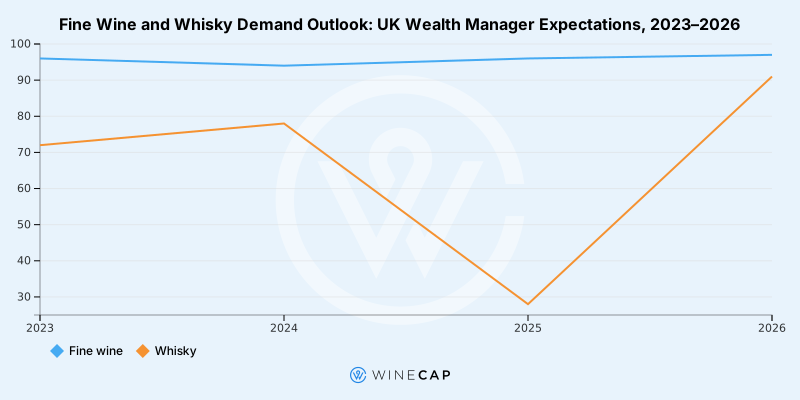
Whisky has followed a less predictable path. While demand expectations rose from 72% in 2023 to 78% in 2024, sentiment weakened in 2025 before rebounding sharply to 91% in 2026. Despite these fluctuations, the latest figures suggest growing confidence in whisky’s long-term appeal as investors continue to explore tangible assets beyond traditional markets.
Whisky investment gathers momentum in the US
Similarly, in the US, wealth managers reported consistently strong expectations for rising client demand for fine wine throughout the period. Although confidence dipped from 92% in 2023 to 84% in 2024, sentiment recovered quickly, reaching 94% in 2025 and 97% in 2026. By the end of the period, US wealth managers were just as optimistic about fine wine demand as their UK counterparts.
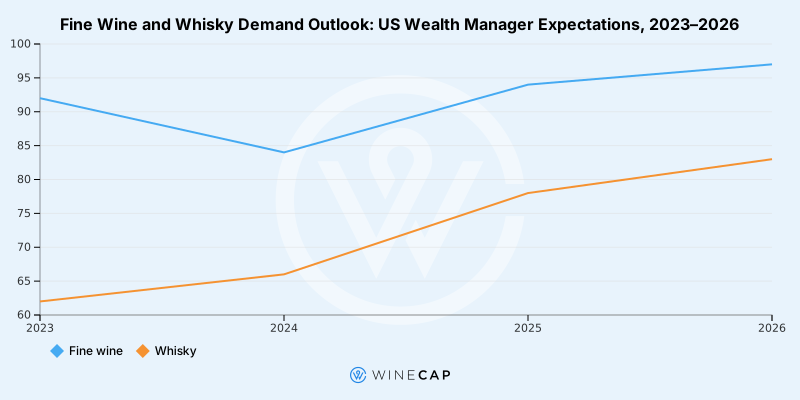
Whisky followed an equally positive trajectory in the US. Expectations for increased client demand rose steadily from 62% in 2023 to 83% in 2026, without the fluctuations seen in the UK market. This suggests a growing awareness of whisky as an alternative investment among US investors, supported by increasing media coverage, auction activity and interest in collectable assets more broadly.
Despite these differences, several themes emerge across both markets. First, confidence in fine wine remains exceptionally high. In every year surveyed, fine wine outperformed whisky in terms of expected client demand, reinforcing its position as the most established collectable asset among wealth managers.
Second, the gap between the two asset classes is narrowing. While fine wine remains the preferred option, enthusiasm for whisky has strengthened considerably since 2023, particularly in the United States. By 2026, more than four-fifths of wealth managers in both countries expected demand for whisky investments to increase.
Taken together, the data points to a broader trend: investors are becoming increasingly comfortable allocating capital to tangible alternative assets. Yet while whisky continues to gain traction, the fine wine market’s maturity, liquidity and pricing transparency appear to be helping it retain its position as the most established collectable asset among wealth managers in both the UK and US.
Why investors compare fine wine and whisky
As investors look beyond traditional asset classes, fine wine and whisky are increasingly competing for the same pool of capital.
The comparison is a natural one. Both are tangible assets with finite supply, global collector markets and strong luxury brand associations. Unlike shares or bonds, fine wine and whisky derive value not only from financial considerations but also from rarity, provenance and cultural significance.
Both asset classes also benefit from scarcity. Every bottle of wine and whisky opened reduces the remaining supply and permanently shrinks the market. In the case of cask whisky, the maturation process itself can add another layer of scarcity and value creation over time.
For many investors, fine wine and whisky offer an attractive alternative to traditional financial markets. They are often viewed as portfolio diversifiers, with inner performance drivers that differ from those affecting equities and bonds. During periods of inflation, market volatility or economic uncertainty, tangible assets can become particularly appealing.
Yet while wine and whisky share many of the characteristics associated with successful collectibles, they differ in terms of market structure, liquidity and investment accessibility. These differences go some way in explaining why wealth managers continue to show stronger confidence in fine wine despite growing enthusiasm for whisky.
Fine wine vs whisky: key differences for investors
Although both assets sit within the broader category of luxury collectibles, the experience of investing in fine wine can be very different from investing in whisky.
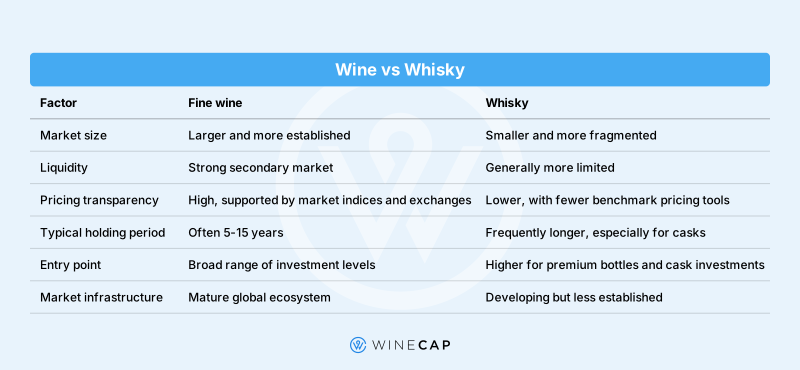
One of the most significant differences lies in market maturity. Fine wine has benefited from decades of development as an investment asset, supported by merchants, brokers, exchanges and independent pricing platforms. Investors can access historical performance data, monitor market trends, and track valuations with a level of transparency rarely seen in other collectible markets.
Liquidity is another important distinction. Investment-grade wines from leading regions such as Bordeaux, Burgundy, Champagne, and Tuscany are traded globally through established channels. While whisky has developed an increasingly active secondary market, trading volumes remain smaller, and liquidity can vary significantly depending on the distillery, release or cask.
Diversification also tends to be easier in fine wine. Investors can spread risk across multiple regions, producers, vintages and styles, creating portfolios with broad exposure to different market drivers. Whisky investors often face a more concentrated universe of investment-grade opportunities.
These advantages do not necessarily make fine wine a superior investment in every circumstance. However, they help explain why wealth managers often view wine as the more mature and accessible option within the collectible asset universe.
Why wine appears to be winning wealth manager attention
The Wealth Report data suggests that demand expectations for fine wine remain consistently stronger than those for whisky among both UK and US wealth managers. Several factors may help explain this trend.
The first is transparency. Fine wine benefits from a more sophisticated pricing ecosystem, with platforms such as Liv-ex providing real-time market data, historical performance information and widely recognised benchmark indices.
Market depth is equally important. Fine wine is supported by a global network of merchants, brokers, exchanges, storage providers and collectors. This infrastructure creates liquidity and confidence, making it easier for investors to enter and exit positions compared with many other collectable assets.
Portfolio construction is another advantage. Fine wine offers exposure across multiple regions, producers, vintages and price points, enabling investors to build diversified portfolios tailored to different risk profiles and investment objectives.
Recent market conditions may also be playing a role. Following a broader correction across the fine wine market since 2022, many investment-grade wines are trading below previous highs. For long-term investors, this has created opportunities to acquire sought-after wines at more attractive valuations, a theme highlighted throughout WineCap’s recent market analysis.
Finally, fine wine’s long history as a traded asset may appeal to wealth managers seeking predictability and professionalism. While whisky has generated considerable excitement in recent years, particularly around cask investments, fine wine’s established market structure may be better aligned with the requirements of advisers responsible for managing client portfolios over the long term.
Whisky’s investment strengths
Despite fine wine’s advantages in market maturity and liquidity, whisky possesses several characteristics that continue to attract investors and explain its growing popularity.
One of whisky’s greatest strengths is its accessibility as a concept. Many consumers are already familiar with iconic brands such as Macallan, Springbank and Yamazaki, and auction headlines featuring record-breaking bottle sales frequently generate mainstream media attention. This visibility can make whisky easier for new investors to understand and engage with.
Scarcity is another powerful driver. Distilleries cannot rapidly increase production of aged stocks, meaning supply constraints can become particularly pronounced for highly sought-after releases. As global demand rises, especially in Asia and North America, these scarcity dynamics can support long-term value appreciation.
Cask ownership has also introduced a unique investment proposition that has no direct equivalent in the wine market. Because whisky continues to mature while stored in cask, investors are effectively holding an asset that changes over time. This creates opportunities for value growth through both ageing and scarcity, although it also introduces additional complexity and risk.
Whisky may also appeal to investors seeking higher growth potential. While this can come with greater volatility, some investors are attracted by the possibility of significant gains from rare bottles, limited releases or sought-after casks. For those with a higher risk tolerance, whisky’s relatively young investment market can present opportunities that are less common in more established asset classes.
Ultimately, whisky’s appeal lies in its combination of scarcity, storytelling, and growth potential. While it may not yet offer the same level of transparency or liquidity as fine wine, its increasing popularity suggests it will remain an important part of the alternative investment landscape.
Fine wine vs whisky: the outlook for 2026 and beyond
The Wealth Report data makes one thing clear: demand expectations for both fine wine and whisky are strengthening. Wealth managers in the UK and US increasingly expect clients to allocate capital towards tangible assets, reflecting broader interest in collectibles, luxury assets and alternative investments.
Yet despite whisky’s growing popularity, fine wine continues to benefit from deeper market infrastructure, greater transparency and stronger liquidity. These advantages help explain why wealth managers continue to express greater confidence in fine wine’s long-term investment prospects.
As interest in collectable assets grows, both markets are likely to expand. For now, however, fine wine remains the benchmark against which other luxury investment assets are measured.
FAQ: Fine wine vs whisky
Is wine or whisky a better investment?
There is no definitive answer, as the right choice depends on an investor’s objectives, risk tolerance and investment horizon. Fine wine generally offers greater market transparency, liquidity and diversification opportunities, making it attractive to wealth managers and long-term investors. Whisky can offer higher growth potential in some areas of the market, but it is often associated with greater volatility and a less mature trading ecosystem.
Are fine wine and whisky casks wasting assets?
In the UK, both fine wine and whisky casks are generally regarded as wasting assets because they have a finite lifespan. As a result, gains on investment-grade wine and whisky casks are typically exempt from Capital Gains Tax (CGT). However, tax treatment can vary depending on the asset and an investor’s individual circumstances, so professional advice should always be sought.
Should I invest in whisky casks or fine wine?
Whisky casks and fine wine are very different investments. Fine wine benefits from established pricing data, active secondary markets and a broad range of investment-grade opportunities. Whisky casks can offer unique value appreciation through the maturation process, but they typically require specialist knowledge and may involve additional costs, regulatory considerations and liquidity challenges.
What are the best alternative investments besides stocks?
Popular alternative investments include fine wine, whisky, art, classic cars, watches, private equity, real estate and precious metals. Each asset class has different risk and return characteristics.
Is whisky still a good investment in 2026?
Many wealth managers believe demand for whisky investments will continue to grow in 2026. WineCap’s Wealth Report found that 91% of UK wealth managers and 83% of US wealth managers expect client demand for whisky investments to increase over the next 12 months. While the market remains attractive, investors should be aware that whisky can be less liquid and more volatile than fine wine.
How liquid is whisky compared with wine?
Fine wine is generally considered the more liquid asset. Investment-grade wines are traded globally through merchants, brokers and exchanges, supported by transparent pricing and established market infrastructure. Whisky’s secondary market has expanded significantly in recent years, but liquidity can vary considerably depending on the bottle, distillery or cask.
What do wealth managers think about wine investments?
WineCap’s Wealth Report data suggests wealth managers remain optimistic about fine wine. In 2026, 97% of wealth managers surveyed in both the UK and US expected client demand for fine wine investments to increase over the following 12 months.
WineCap’s independent market analysis helps investors build diversified fine wine portfolios with full ownership and transparent pricing. Speak to one of our wine investment experts and start building your portfolio. Schedule your free consultation today.
Capital at risk. Past performance is not a guide to future returns. Returns are not guaranteed.