WineCap Wealth Report 2025: US Edition
In a year marked by shifting interest rates, political uncertainty, and evolving investor mindsets, one asset is quietly holding its ground – and gaining new momentum: fine wine.
According to WineCap’s newly released 2025 Wealth Report, fine wine has once again claimed the top spot among collectible investments, with 94% of US wealth managers expecting demand to rise this year.
Key report findings:
- 94% of US wealth managers expect demand for fine wine to increase in 2025 (up from 84% in 2024)
- Fine wine now appears in 28% of high-risk portfolios
- 72% say high interest rates are a supportive factor for fine wine investment
- 98% of respondents value wine’s independence from the US dollar as a macro hedge
- 46% cite strong long-term returns as a key reason for rising demand
- Portfolio allocations to wine now average 10.7%, reflecting more diversified investment strategies
‘Fine wine continues to prove itself as a robust and intelligent asset class,’ said Alexander Westgarth, Founder and CEO of WineCap. ‘While some seasoned collectors are selling to capitalise on earlier gains, we’re seeing younger, more data-driven investors enter the market – redefining how wine is used in wealth portfolios.’
Fine wine in the world of investment
According to the report, fine wine ranks higher than all other collectible investments for 2025. Confidence in its market stability, liquidity, and transparency places it above art, watches, whiskey, and luxury handbags.
In a post-pandemic landscape marked by inflation spikes, rate fluctuations, and policy shifts, wealth managers are increasingly recommending tangible assets with low correlation to equities. Fine wine’s appeal as an inflation-resistant, currency-independent, and globally traded asset makes it an attractive choice for investors seeking stability across economic cycles.
A maturing market
Despite a dip in average allocations from 13% to 10.7%, the report points to a healthy market recalibration – one where liquidity is improving, supply is expanding, and younger investors are driving new demand.
‘This is no longer a passion-driven niche – it’s a credible, data-backed, and globally relevant investment class,’ added Westgarth. ‘As the landscape evolves, we see fine wine becoming a cornerstone of modern portfolio diversification.’
The report further looks at the factors creating demand for fine wine, the impact of Trump’s policies on investment, and how AI is modernising the market.
Download your complimentary copy of the 2025 WineCap Wealth Report and discover how fine wine can enhance your investment portfolio.
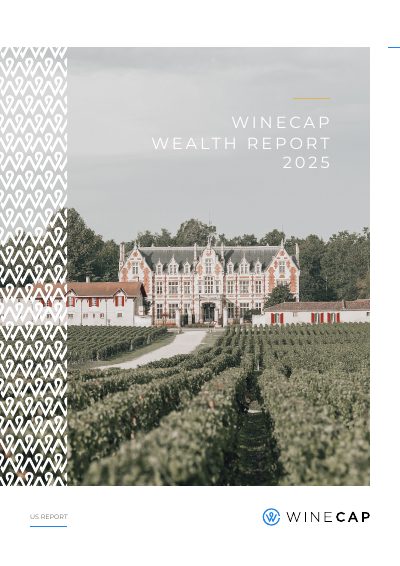 WineCap Wealth ReportSign up for free to download this report🔒 Sign up nowor Sign in
Capital at risk. Past performance is not a guide to future returns. Returns are not guaranteed.