Best UK wine clubs compared: Subscription clubs vs fine wine investment
- UK wine subscription clubs start from around £20 per month, offering curated, duty-paid bottles for drinking and discovery rather than investment.
- Several of the UK’s best-known branded wine clubs, including the Sunday Times, BBC Good Food and Daily Mail Wine Clubs, are supplied by the same buying team and fulfilment network.
- Fine wine investment platforms differ fundamentally from subscription clubs, focusing on investment-grade wines held in bond for long-term ownership and potential resale.
Wine subscription clubs have become one of the UK’s most popular ways to discover new bottles, with memberships ranging from around £20 per month to specialist schemes with one-off joining fees. Most are built around curated deliveries selected by an expert buying team, making them ideal for regular drinking and exploration.
Fine wine investment platforms operate differently. Rather than delivering wine for immediate consumption, they focus on professionally stored, investment-grade wines that remain in bond and can later be sold on the secondary market. This guide compares the leading UK wine clubs, explains how they work, and outlines how they differ from fine wine investment.
What wine subscription clubs offer
A wine subscription club is a curated retail service rather than an investment vehicle. Members receive regular deliveries chosen by a buying team, usually organised by region, style or producer.
The wine is delivered duty paid to a home address and is intended to be enjoyed. Unlike investment-grade wine held in bond, there is generally no established mechanism for storing the bottles professionally or selling them later through the secondary market.
A wine subscription club usually provides:
- Curated discovery, with a buying team selecting wines the member would not necessarily choose themselves
- Regular delivery on a monthly or quarterly schedule, or on a flexible credit-accumulation model
- VAT and duty paid at purchase, the standard UK retail transaction
- No storage obligations: the wine is intended for drinking, not for holding
- No secondary market liquidity: there is no infrastructure for selling subscribed bottles on
The main UK wine clubs
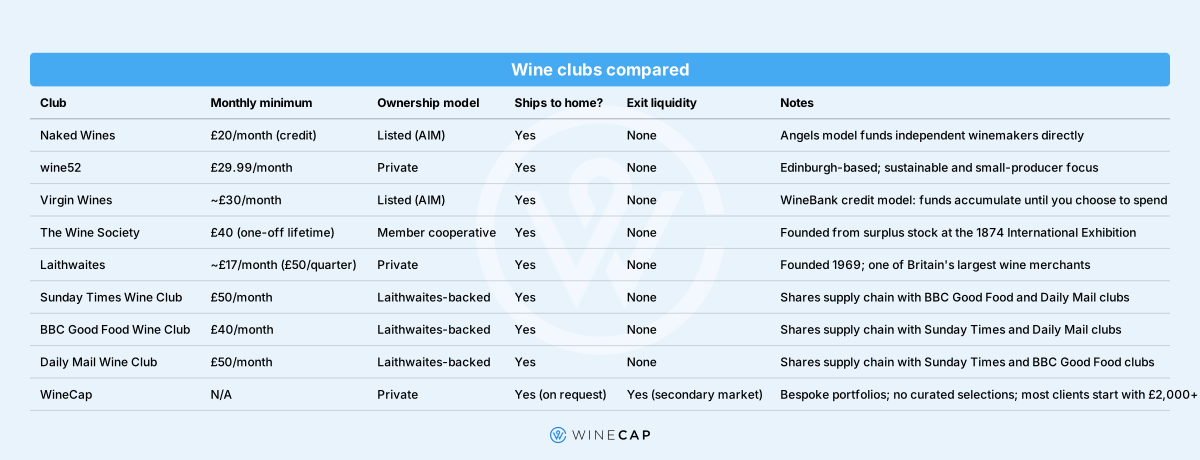
The UK wine club market is more varied than it first appears. Membership models range from monthly subscriptions starting at around £20 to one-off lifetime fees, while providers include member-owned cooperatives, specialist wine merchants and publicly listed retailers. Understanding how each club operates can help buyers choose the model that best suits their drinking habits and budget.
The Wine Society is one of the UK’s oldest and most respected wine organisations. Founded in 1874 using surplus wines from the International Exhibition, it remains a member-owned, not-for-profit cooperative. Members pay a one-off £40 joining fee, with profits reinvested into the business rather than distributed to shareholders. The Society is particularly well regarded for its own-label wines, broad regional range and transparent allocation of limited releases.
Laithwaites operates the Four Seasons Club, which delivers 12 bottles every quarter. It also supplies three of the UK’s best-known media-branded wine clubs: the Sunday Times Wine Club, BBC Good Food Wine Club and Daily Mail Wine Club. Although each has different branding and marketing, they share the same buying team and fulfilment network.
Wine52 focuses on discovery, delivering three bottles each month from smaller producers alongside tasting notes, food-pairing suggestions and a magazine. The emphasis is on introducing members to wines they are unlikely to encounter in supermarkets.
Virgin Wines takes a different approach through WineBank, where members pay a monthly amount into an account and decide when to spend their credit, rather than receiving a fixed monthly case.
Naked Wines operates its Angels model, with members contributing monthly credit that helps fund independent winemakers in return for access to exclusive wines. Because many of these wines are produced specifically for the platform, direct price comparisons with other retailers are often difficult.
Many wine clubs also sell own-label or exclusive-label wines. This can offer good value and access to unique bottlings, but it also makes comparing prices across different retailers more challenging.
How wine investment platforms differ from subscription clubs
Wine investment platforms and wine subscription clubs both involve buying wine, but they are designed for different purposes. Subscription clubs focus on discovery and enjoyment, while investment platforms are built around long-term ownership, professional storage and access to the secondary market.
When investment-grade wine is purchased through a wine investment platform or specialist merchant, it is typically stored in an HMRC-recognised bonded warehouse. The wine remains in bond, meaning VAT and excise duty are suspended until it is withdrawn for drinking or exported. For collectors holding wine over many years, this can significantly reduce the overall cost of ownership.
In the UK, fine wine is also generally treated as a wasting chattel, meaning gains from its sale are typically exempt from Capital Gains Tax. While wine does not lose this status if it is delivered to a home address, removing it from bond breaks the documented chain of provenance that secondary market buyers rely on when assessing authenticity, storage conditions and value.
Unlike a subscription service, a wine investment platform does not send pre-selected cases each month. Instead, purchases are based on the buyer’s objectives, whether building an investment portfolio, assembling a long-term collection or acquiring wines to enjoy at maturity. The wine remains professionally stored until the owner chooses to sell it or take delivery, making long-term ownership rather than regular consumption the primary focus.
Why provenance and in-bond storage determine value
Provenance is not a minor technical detail in the fine wine market. It is a key pricing input.
A wine held in professional bonded storage from its release carries a documented custody record: the warehouse, the owner, the dates of transfer. Professional bonded warehouses also maintain constant temperature and humidity at the levels fine wine requires for long-term ageing. Home environments rarely match those conditions consistently. Secondary market buyers can assume that they are buying a wine in optimum condition.
A wine held at home for the same period, even under careful conditions, cannot offer the same confidence in its conditioning. Buyers discount accordingly, and the discount can be significant.
Who should choose a wine club, an investment platform, or both
Wine buying sits on a spectrum, and the choice between a subscription club and an investment platform is not always binary. The question is not whether to drink or to invest. It is what structure serves what purpose.
A wine subscription club suits the buyer who wants regular discovery at a defined monthly cost, with no obligation around storage or resale. The pleasure is immediate. The financial commitment is modest. Laithwaites, wine52, and Naked Wines are all well-suited to this profile, each with a different approach to curation and pricing.
A wine investment platform suits the buyer with a longer horizon: someone building a portfolio of fine wine over five to ten years and seeking the tax efficiency and secondary market access that in-bond ownership provides. That buyer is not choosing against wine enjoyment. They are choosing a different purchasing model and probably greater involvement in the structuring of their collection.
Many collectors run both approaches in parallel. A subscription delivers curated discovery for the table each month. An investment portfolio builds in bonded storage. These are complementary, not competing.
Buyers can help clarify the decision by answering the following questions:
- Is this wine intended for drinking in the near term, or for holding over five or more years?
- Does home storage meet the temperature and humidity conditions fine wine requires?
- Is secondary market access important, or is the enjoyment of drinking the primary goal?
- What is the monthly or annual budget, and how does that map to investment minimums?
In-person wine clubs
Not all wine clubs deliver bottles to your door. Some focus instead on providing access to exceptional wine lists, tastings and events through a membership model.
The best-known example in the UK is 67 Pall Mall in St James’s, London. Founded in 2015, the private members’ club offers one of the world’s largest wine lists by the glass, alongside dining, educational events and sommelier expertise. Membership is based on an annual fee rather than a subscription for wine deliveries, making it a different proposition from a traditional wine club.
Wine clubs vs wine investment: choosing the right option
Wine subscription clubs and fine wine investment platforms are designed for different goals. Subscription clubs offer convenience, discovery and regular enjoyment, while investment platforms focus on long-term ownership, professional in-bond storage and access to the secondary market.
For many wine enthusiasts, the two models work well together. A subscription club provides a steady stream of wines to enjoy today, while an investment portfolio preserves investment-grade bottles for future drinking or potential resale. Rather than choosing one over the other, the key is understanding what each offers and selecting the approach that best matches your objectives.
FAQ: Wine clubs
Is a wine subscription club the same as wine investment?
No. A wine subscription club is a retail product: a buying team selects bottles and delivers them to a home address, VAT and duty paid. A wine investment platform purchases bottles on a client’s behalf and holds them in a bonded warehouse in duty-suspended status, with secondary market access when the client chooses to sell. The two serve different financial and practical purposes and operate under entirely different structures.
Which wine clubs are available in the UK?
The main services include Laithwaites, wine52, Naked Wines, Virgin Wines, and The Wine Society. Three of the most prominent media-branded clubs, the Sunday Times Wine Club, BBC Good Food Wine Club, and Daily Mail Wine Club, all operate through the Laithwaites supply chain. Choice depends on budget, preferred delivery frequency, and whether the focus is discovery, specific regions, or supporting independent winemakers directly.
What is the difference between the Sunday Times Wine Club and Laithwaites?
In practice, very little. The Sunday Times Wine Club, BBC Good Food Wine Club, and Daily Mail Wine Club are all operated through Laithwaites’ buying team and supply chain. The branding and media partnerships differ, but the wines, selection process, and fulfilment infrastructure are the same across all three.
What does wine held in bond mean?
Wine held in bond is stored in an HMRC-recognised bonded warehouse in duty-suspended status. Excise duty and VAT are not paid until the wine leaves bond, either for delivery or for sale. Professional bonded storage provides controlled temperature and humidity, insurance, and a documented ownership record that supports secondary market pricing. Home storage does not provide equivalent conditions or the same provenance chain.
Can you make money from a wine subscription club?
Not in any structured sense. Once wine has been delivered to a home address, there is no established infrastructure for selling it on the secondary market. Individual bottles can theoretically be sold privately, but without a verified storage record or professional provenance chain, buyers discount heavily. Wine subscription clubs are designed for drinking, not for generating a financial return.
WineCap’s independent market analysis helps investors build diversified fine wine portfolios with full ownership and transparent pricing. Speak to one of our wine investment experts and start building your portfolio. Schedule your free consultation today.
Capital at risk. Past performance is not a guide to future returns. Returns are not guaranteed.