Sweet wines explained: from Sauternes to Tokaji Aszu
- Sweet wines are produced using a variety of techniques including noble rot, late harvesting, air drying, and freezing.
- Some of the world’s most prestigious wines, including Chateau d’Yquem and Tokaji Aszu, are sweet wines capable of ageing for decades.
- While sweet wines can offer value and diversification for collectors, secondary market demand remains concentrated on a small number of leading producers.
Sweet wines may lack the spotlight enjoyed by Bordeaux, Burgundy and Champagne, but they are responsible for some of the most complex, long-lived and labour-intensive bottles in the world.
From the botrytised vineyards of Sauternes and Tokaj to Germany’s prized Rieslings, sweet wines come in many styles. What unites them is the concentration of sugar, acidity and flavour that allows the finest examples to evolve for decades in bottle.
For wine investors, sweet wines also represent an overlooked corner of the market. While trading volumes are lower than for leading dry wines, many of the world’s finest dessert wines offer exceptional quality, remarkable longevity and, in some cases, compelling value.
This guide explores how sweet wines are made, the regions that define the category and the role they play in today’s fine wine market.
What makes a wine sweet?
Sweetness in wine comes from residual sugar – natural grape sugars that remain after fermentation has finished.
While many consumers associate sweet wine with inexpensive supermarket brands, the world’s finest sweet wines achieve their sweetness naturally through specialised vineyard practices that concentrate sugar within the grape.
The key to great sweet wine is balance. Sugar alone can make a wine feel heavy or cloying. The best examples combine sweetness with vibrant acidity, creating wines that are rich and intense yet remarkably fresh.
Interestingly, many sweet wines contain less sugar than popular soft drinks. A glass of Sauternes or Tokaji may taste intensely sweet, but high acidity and complex flavours often make them feel more balanced than sugary soft drinks.
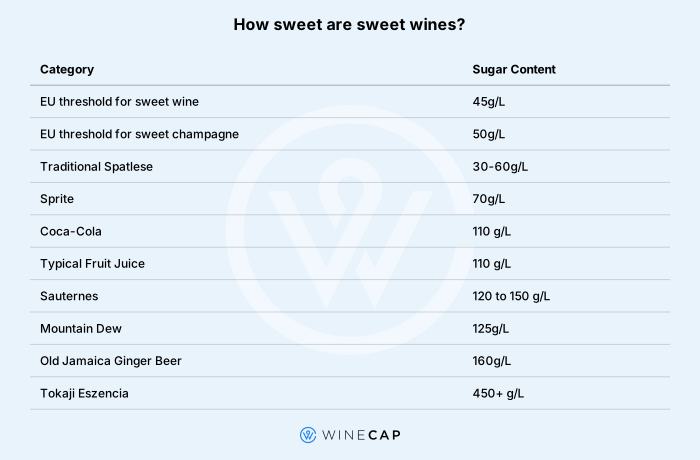
Why are sweet wines expensive to produce?
The finest sweet wines are among the most labour-intensive wines in the world.
In regions such as Sauternes, vineyard workers may pass through the same rows multiple times during harvest, selecting only individual grapes that have reached the ideal stage of concentration. Yields can be dramatically lower than those of dry wines, and entire vintages may be compromised if weather conditions fail to cooperate.
Despite these challenges, many sweet wines remain surprisingly affordable compared to leading dry wines from Burgundy, Napa Valley and Bordeaux. This combination of rarity, complexity and relative value makes sweet wine an appealing category for collectors seeking something beyond the market’s most heavily traded regions.
How are sweet wines made?
The world’s finest sweet wines rely on natural methods of concentrating sugar within the grape. The most important techniques include noble rot, late harvesting, air drying and freezing grapes on the vine.
Noble rot (Botrytis cinerea)
The most prestigious sweet wines in the world are produced using Botrytis cinerea, commonly known as noble rot.
Under the right conditions, this beneficial fungus punctures grape skins, allowing water to evaporate while concentrating sugars, acids and flavour compounds. The result is a wine of extraordinary intensity and complexity.
Botrytised wines are often characterised by aromas of honey, marmalade, dried apricot and exotic spice. They also possess remarkable ageing potential, with the finest examples evolving for many decades.
Producing noble rot wines is highly risky. The fungus requires a delicate balance of humid mornings and warm, dry afternoons. Too much moisture can cause destructive grey rot rather than noble rot, potentially ruining the crop.
Sauternes in Bordeaux remains the world’s benchmark for botrytised wine, although outstanding examples are also produced in Tokaj, Germany, Austria and the Loire Valley.
At a glance:
- Botrytis requires a specific cycle of damp mornings and dry, sunny afternoons.
- It is a risky process because the fungus can turn into grey rot if it rains too much.
- Grapes must be harvested by hand in multiple “tries” or passes.
- Common flavour markers include marmalade, honey, and exotic spices.
- Famous regions include Sauternes, Barsac, and Quarts de Chaume Grand Cru in the Loire Valley.
Late harvest wines
Late harvest wines are made by leaving grapes on the vine beyond the normal harvest period.
As the grapes continue to ripen, water evaporates and sugar levels increase naturally. Unlike botrytised wines, noble rot is not necessarily involved.
These wines typically retain more primary fruit character than noble rot wines, displaying flavours of peach, apricot, citrus and tropical fruit. High acidity remains crucial to maintaining freshness and balance.
Riesling and Chenin Blanc are particularly well suited to this style, while Alsace’s Vendange Tardive wines are among the best-known examples.
At a glance:
- Grapes often look shrivelled or like raisins on the vine.
- The technique relies on a dry, warm autumn to prevent spoilage.
- High acidity is crucial to balance the increased sugar levels.
- Riesling and Chenin Blanc are particularly suited to this style.
- These wines are often more affordable than botrytised alternatives.
Air drying (Passito)
Air drying, known as the passito method in Italy, involves harvesting grapes and then drying them before fermentation.
Traditionally, bunches are laid on straw mats or stored in well-ventilated drying rooms for weeks or even months. As water evaporates, sugars, acids and flavours become increasingly concentrated.
This technique produces rich, complex wines with flavours of dried fruits, nuts, caramel and spice. Unlike noble rot wines, the concentration occurs after harvest, giving winemakers greater control over the process.
Notable examples include Vin Santo from Tuscany and Recioto della Valpolicella from Veneto.
At a glance:
- Known as appassimento.
- The primary region is Veneto in Italy where it’s used to make Amarone.
- Straw mats are traditionally used, leading to the term “straw wine.”
- Flavours often lean toward dried fruits and roasted nuts, flavors that Sauternes tends to develop with extended aging.
Ice wine (Eiswein)
Ice wine is produced from grapes that freeze naturally on the vine.
The grapes are harvested and pressed while frozen, allowing only a small quantity of highly concentrated juice to be extracted. The frozen water remains behind as ice crystals, resulting in intensely sweet wines balanced by exceptionally high acidity.
The process is inherently risky because producers must wait for sufficiently cold temperatures while leaving the fruit exposed in the vineyard. If freezing conditions fail to arrive, the crop may be lost entirely.
Canada and Germany are widely regarded as the leading producers of ice wine.
At a glance:
- Grapes are often picked in the middle of the night to ensure they stay frozen and pressed immediately in a cold environment
- Yields are extremely low, often only five to ten per cent of a normal harvest.
- Riesling, Vidal, and Cabernet Franc are common varieties.
- Ice wine is rarely affected by Botrytis, leading to very clean flavours.
- Cryoextraction is possible, mechanically freezing grapes, but these wines are often subject to labelling restrictions.
Sauternes: the benchmark for sweet wine
No discussion of sweet wine would be complete without Sauternes.
Located south of Bordeaux, the region benefits from a unique microclimate created by the meeting of the Ciron and Garonne rivers. Morning mists encourage the development of noble rot, while sunny afternoons help concentrate the grapes.
The wines are typically produced from Semillon, Sauvignon Blanc and Muscadelle. Semillon provides richness and ageing potential, while Sauvignon Blanc contributes acidity and aromatic freshness.
At the pinnacle sits Chateau d’Yquem, the only estate awarded Premier Cru Superieur status in Bordeaux’s 1855 Classification. For many collectors, Yquem occupies a similar position within sweet wine to that of the First Growths in Bordeaux.
The finest vintages can age for a century or more, developing extraordinary layers of honey, caramel, spice and dried fruit while retaining remarkable freshness.
Tokaji Aszu: Hungary’s historic treasure
Often described as one of the world’s first great fine wines, Tokaji Aszú has a history dating back centuries.
Produced in Hungary’s Tokaj region, it is made using botrytised grapes, primarily Furmint and Harslevelu. Traditionally, the affected berries are collected separately and added to a base wine, creating a style known for its intense sweetness, vibrant acidity and exceptional longevity.
Historically, sweetness levels were measured using a puttonyos system, reflecting the number of baskets of botrytised grapes added during production. The rarest and most concentrated wines are known as Eszencia, one of the most intensely sweet wines produced anywhere in the world.
Tokaji was famously described as “the wine of kings and the king of wines” and remains one of the most distinctive sweet wine styles available today.
Beyond Sauternes and Tokaj
While Sauternes and Tokaji dominate discussions around sweet wine, several other regions produce outstanding examples.
Germany is renowned for sweet Rieslings ranging from Spätlese and Auslese to the rare Beerenauslese and Trockenbeerenauslese categories. Leading producers such as Egon Müller and Joh. Jos. Prüm have demonstrated the remarkable ageing potential and collectability of these wines.
In South Africa, Klein Constantia’s Vin de Constance continues a tradition that dates back to the eighteenth century and remains one of the Southern Hemisphere’s most celebrated sweet wines.
Meanwhile, producers across Alsace, Austria and the Loire Valley continue to craft sweet wines that combine richness, complexity and longevity.
Can you invest in sweet wines?
Sweet wines occupy a niche position within the secondary market. Trading volumes are generally lower than those of Bordeaux, Burgundy and Champagne, meaning liquidity can be more limited.
However, the category offers some unique characteristics. The finest sweet wines possess extraordinary ageing potential, often remaining vibrant for many decades. Prices have also tended to move independently from broader fine wine market trends, making sweet wine an interesting source of diversification for collectors.
Market demand is concentrated around a relatively small number of leading names, particularly Chateau d’Yquem, top Sauternes estates, rare Tokaji Aszu bottlings and a handful of elite German producers.
As a result, most collectors view sweet wine as a complementary part of a broader cellar rather than a primary driver of investment returns. For many enthusiasts, the attraction lies as much in the drinking experience as in the potential for appreciation.
At a glance:
- Secondary market demand is concentrated on a few top names.
- Sweet wines are often released with significant age, reducing the “early bird” profit.
- They are excellent for long-term cellaring due to their incredible stability.
- Most collectors buy sweet wine to drink rather than to flip for profit.
Final thoughts
Sweet wines remain one of the most fascinating and misunderstood categories in the wine world. Produced using some of the most demanding techniques in viticulture, the finest examples combine extraordinary concentration with freshness, complexity and longevity.
Whether exploring the legendary wines of Sauternes, the historic vineyards of Tokaj or the elegant sweet Rieslings of Germany, collectors can discover wines that offer both exceptional drinking experiences and a unique perspective on the fine wine market.
Far from being an outdated style, the world’s finest sweet wines continue to demonstrate why they have captivated collectors, critics and wine lovers for centuries.
FAQ: Sweet wines
How long does a bottle of Sauternes last once opened?
Sweet wines generally last longer than dry wines after opening due to their higher sugar levels. A bottle of Sauternes stored in the refrigerator and sealed with a stopper can often remain enjoyable for one to three weeks, although freshness and aromatic intensity will gradually decline over time.
What is the difference between late harvest and noble rot?
Late harvest wines are made from grapes that remain on the vine longer than usual, allowing sugars to concentrate naturally. Noble rot wines are affected by the fungus Botrytis cinerea, which dehydrates the grapes and further concentrates sugars, acids and flavours. Noble rot typically produces more complex aromas, including honey, marmalade and spice.
What is noble rot in wine?
Noble rot is the beneficial form of the fungus Botrytis cinerea. Under the right conditions, it causes grapes to lose water while concentrating sugars and flavour compounds. The process is responsible for some of the world’s most celebrated sweet wines, including Sauternes and Tokaji Aszú.
Can sweet wine be aged?
Yes. The finest sweet wines are among the most age-worthy wines in the world. Their combination of sugar, acidity and concentration allows many examples to evolve for decades, while exceptional bottles of Sauternes, Tokaji and German Riesling can continue developing for a century or more.
Why is ice wine so expensive?
Ice wine is expensive because it is one of the most challenging wine styles to produce. Grapes must freeze naturally on the vine before harvest, yields are extremely low, and the harvest often takes place in difficult winter conditions. The small amount of juice extracted from frozen grapes also contributes to the high production cost.
What is the difference between Sauternes and Tokaji Aszu?
Both are prestigious sweet wines made using botrytised grapes, but they come from different regions and grape varieties. Sauternes is produced in Bordeaux, primarily from Semillon and Sauvignon Blanc, while Tokaji Aszú is made in Hungary using grapes such as Furmint and Hárslevelű. Tokaji is often characterised by higher acidity and a distinctive citrus and apricot profile.
Do sweet wines pair well with food?
Yes. Sweet wines are highly versatile at the table. They are traditionally paired with desserts, but many styles also work exceptionally well with blue cheese, foie gras, spicy dishes and certain seafood preparations. The best pairings balance sweetness, acidity and intensity of flavour.
Are sweet wines a good investment?
Sweet wines can play a role in a diversified fine wine collection, particularly top examples from Sauternes, Tokaj and Germany. However, secondary market demand is generally lower than for Bordeaux, Burgundy and Champagne, meaning they are often purchased as much for enjoyment as for investment potential.
WineCap’s independent market analysis helps investors build diversified fine wine portfolios with full ownership and transparent pricing. Speak to one of our wine investment experts and start building your portfolio. Schedule your free consultation today.
Capital at risk. Past performance is not a guide to future returns. Returns are not guaranteed.